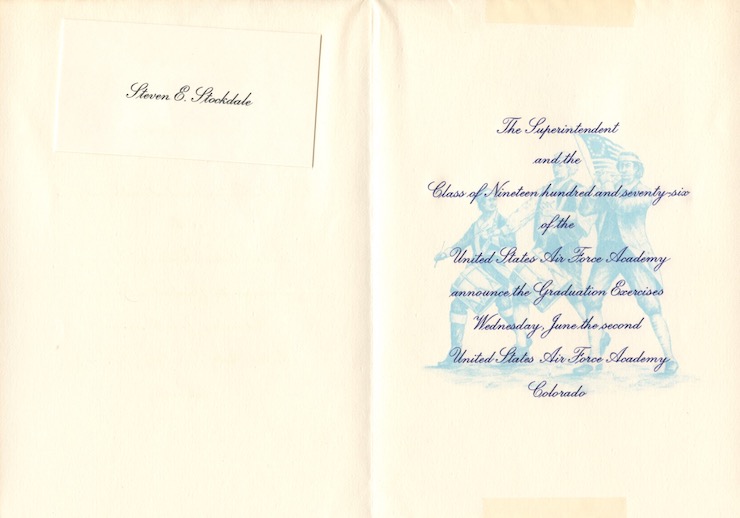
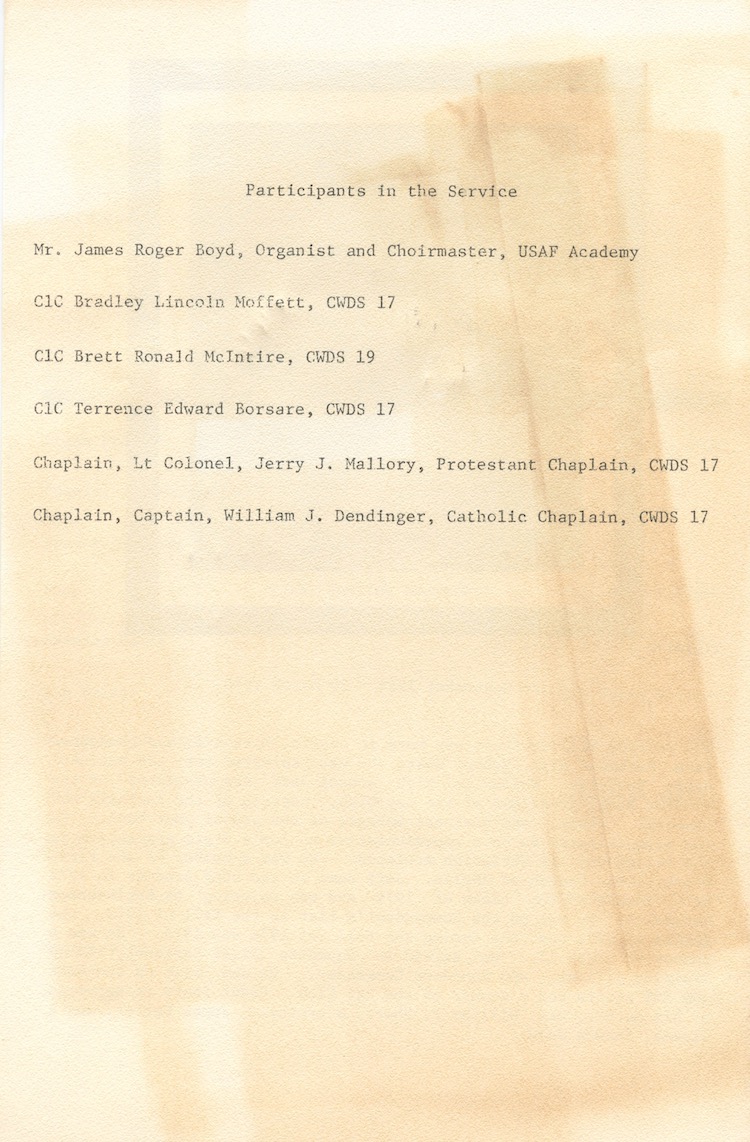
On 27 May 1976, cadets from Fourth (4th) Group participated in honoring the Group AOC and Senior NCO with a “Farewell Roast.” Here’s the program.
[metaslider id=”6519″]

On 27 May 1976, cadets from Fourth (4th) Group participated in honoring the Group AOC and Senior NCO with a “Farewell Roast.” Here’s the program.
[metaslider id=”6519″]
While this was rather perfunctory, and I didn’t do all that much, it’s still a nice reminder that I did play a small role in an event of some historical consequence.
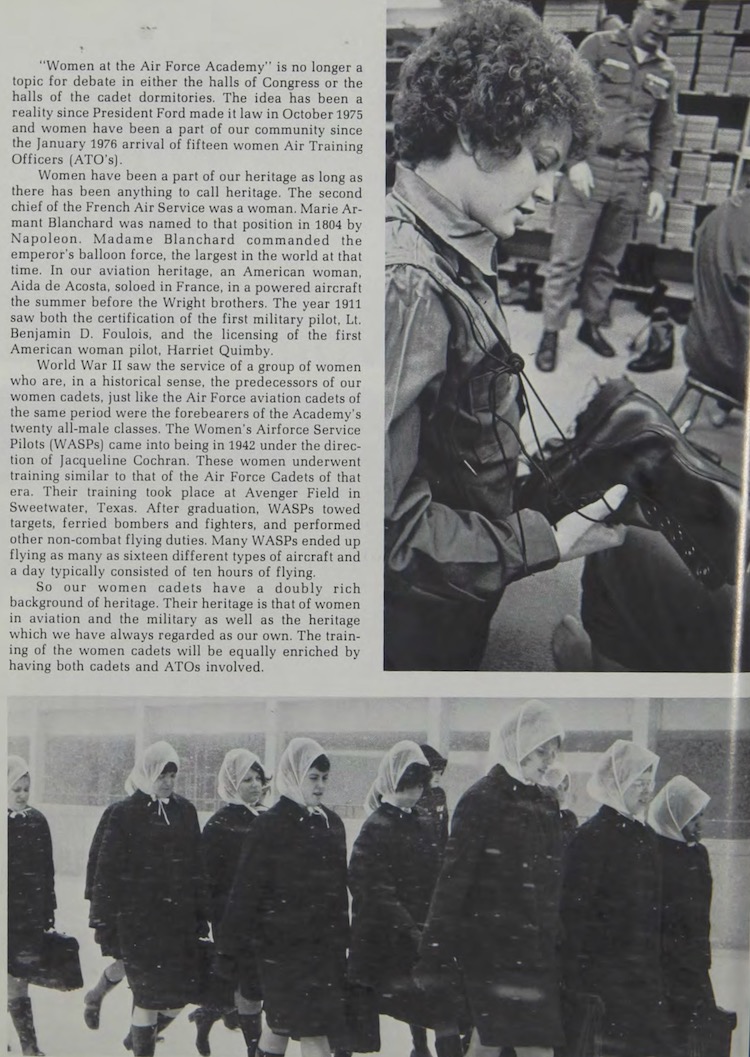
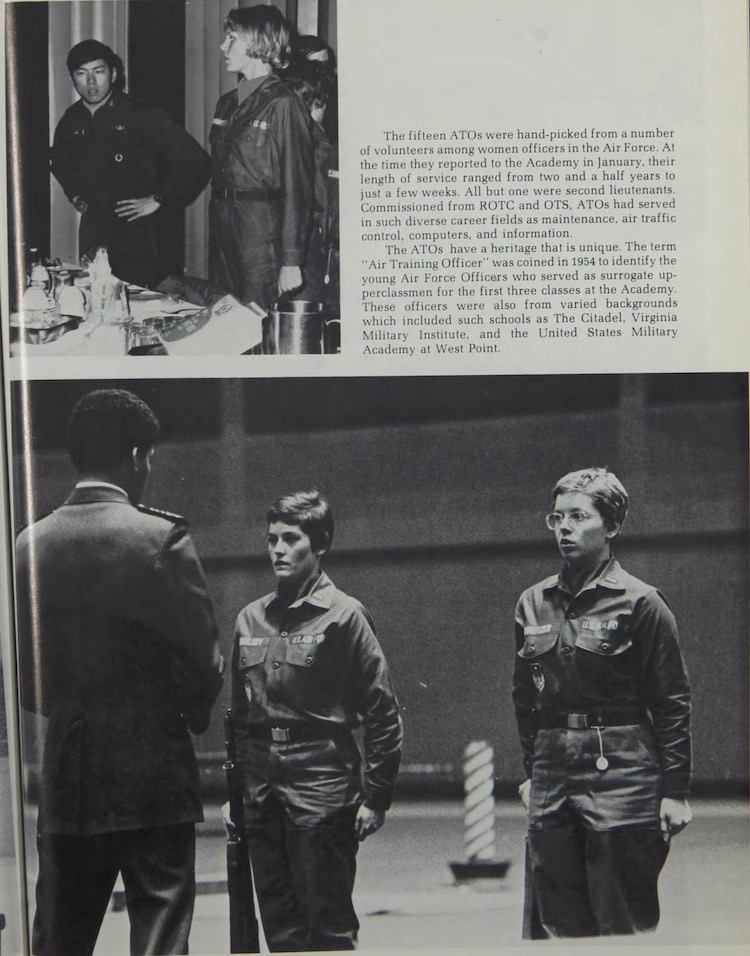
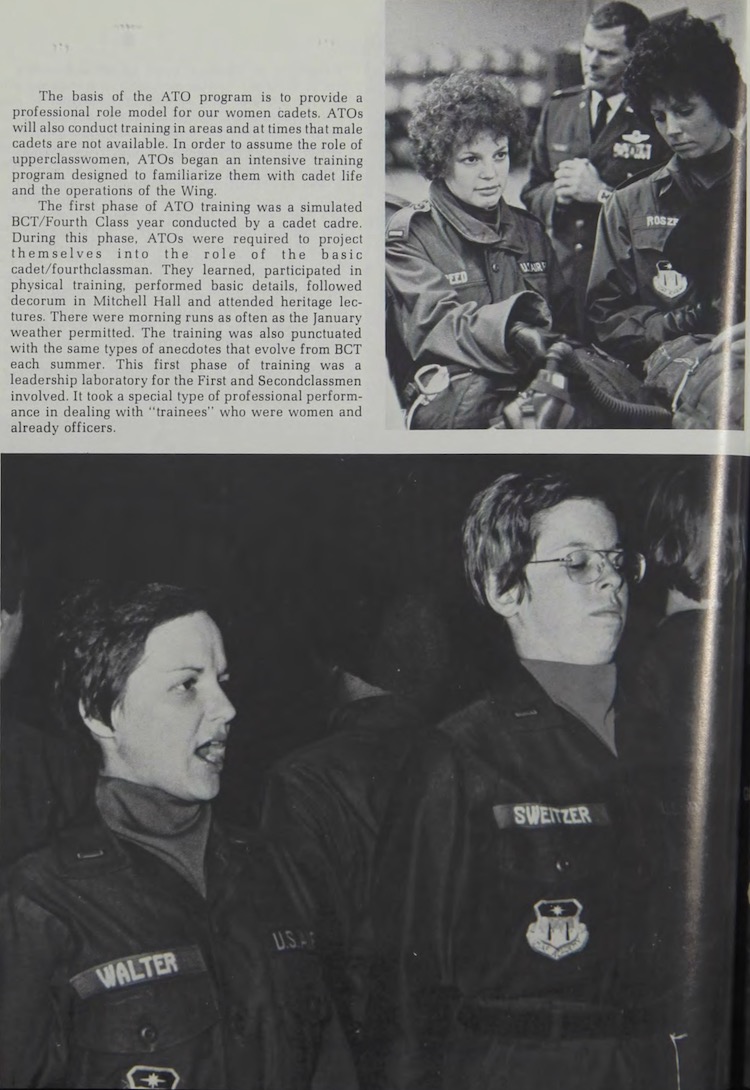
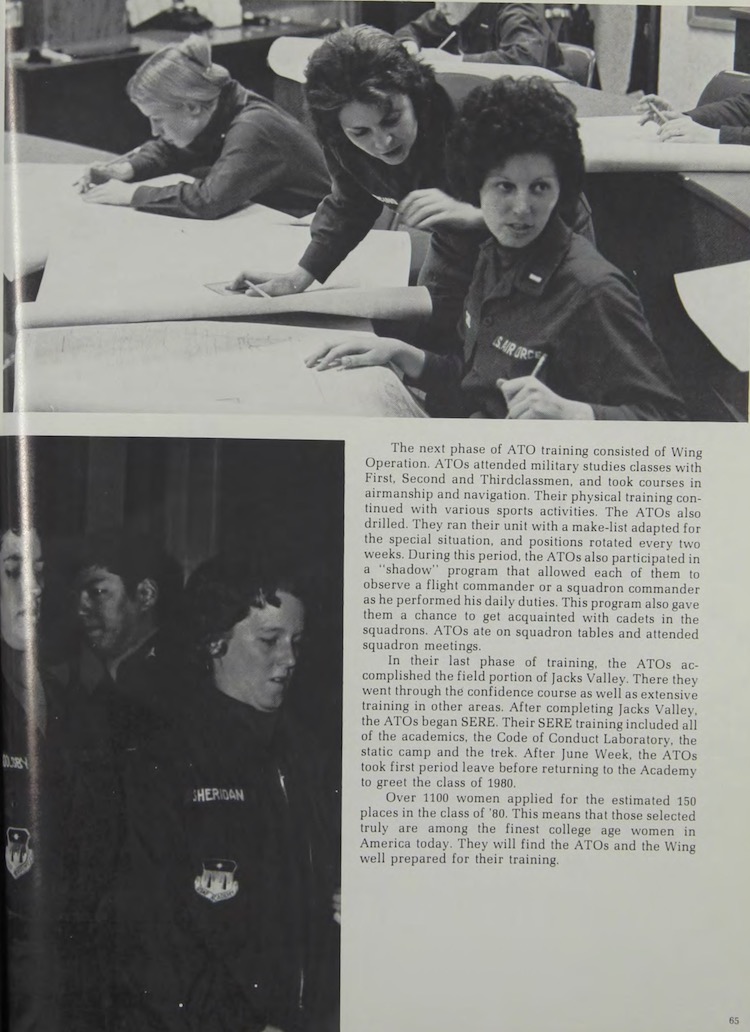
Note: Unless you knew who the “Air Training Officers (ATOs)” were, you wouldn’t be able to discern their significance from the letter. There’s no mention of gender. But in this case, “ATOs” were fifteen women officers (fourteen 2nd Lieutenants and one 1st Lt.), who went through an abbreviated and concentrated version of BCT, 4th Class year, academics, and SERE, that prepared them to serve as the “upperclass” women role models and leaders for the first class of women cadets who entered with the Class of 1980. See four pages about the ATOs from the ’76 Polaris below.

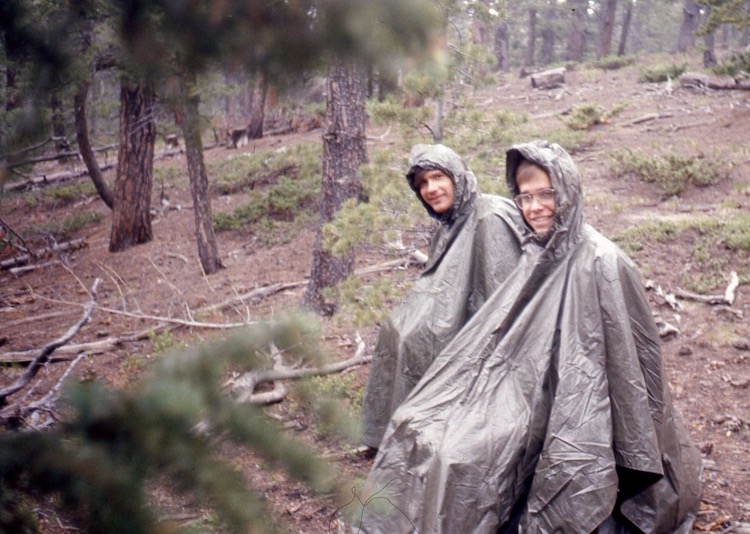
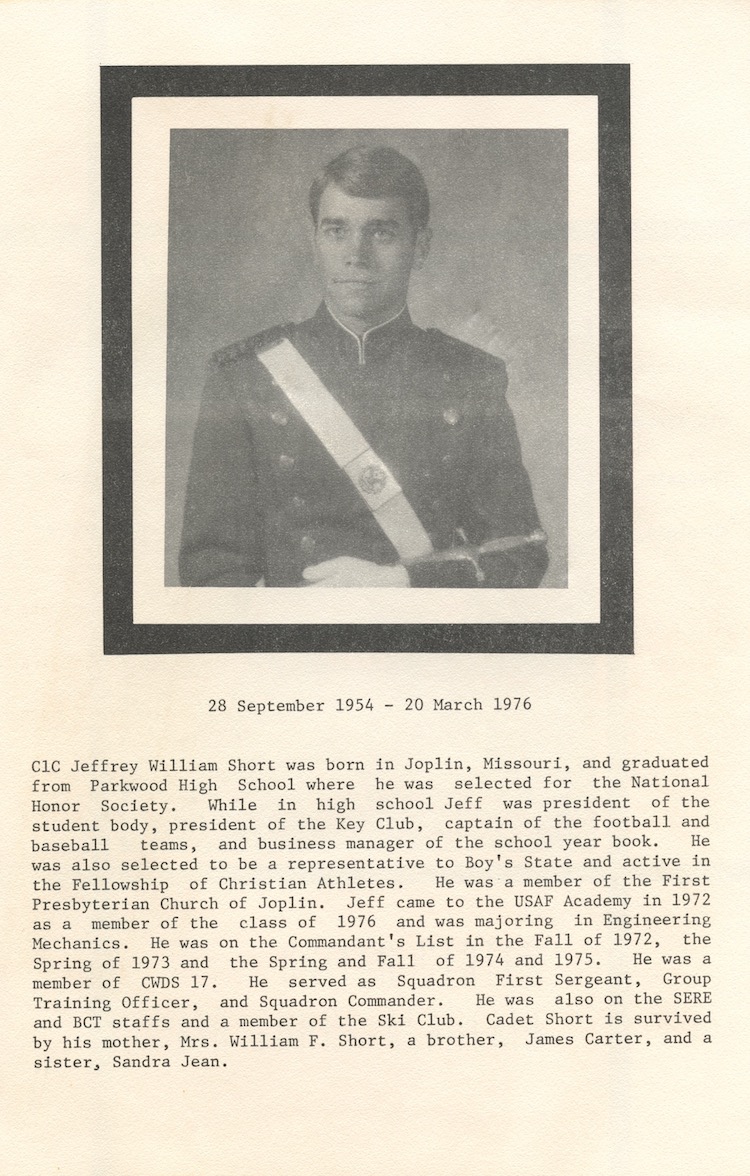
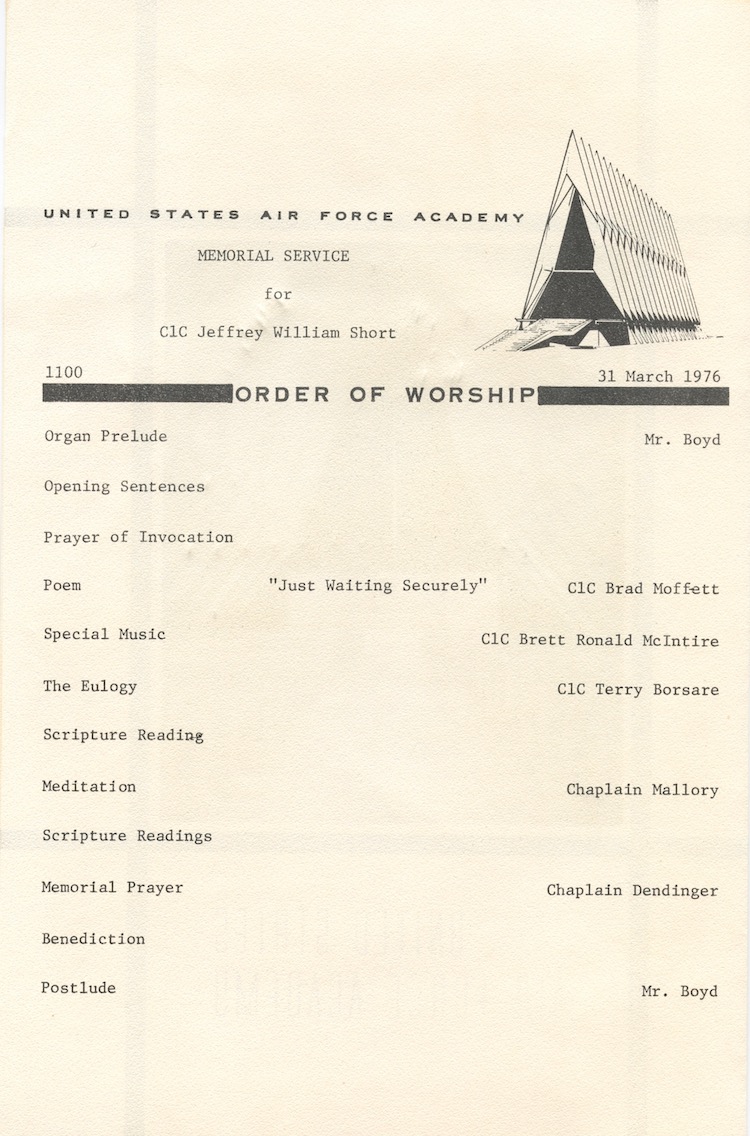
Jeff Short died tragically on March 20, 1976, just 74 days before he would’ve graduated with the Spirit of ’76. I can’t find the supporting evidence, but I recall he died in a car accident coming back to the Academy from Spring Break. Jeff and I roomed together during SERE in the summer of 1975, both as interrogators during the compound period and aggressors during the survival and escape phase.
As a Firstie I received two Certificates of Merit, one as a Squadron Commander and another as Outstanding Flight Commander for Fourth Group, Fall Make List (i.e., 1st go-round).


I kept a steno-sized spiral notebook my Firstie year while I was a Flight Commander (first go-round) and then Squadron Commander (winter go-round). These are from the winter (9 Nov 75 to 29 Feb 76), primarily notes from Group meetings and for Squadron meetings. It looks like I missed several meetings at which either Dano Sawyer (Ops Officer) or Pete Trump (Flight Commander) sat in and took the notes. Nothing of particular relevance here, other than providing a window into the mundane kinds of things that we dealt with back then.
Navigation tip: hover over the image and look for the “< . . . >” arrows to appear about midway down.
[metaslider id=”6915″]
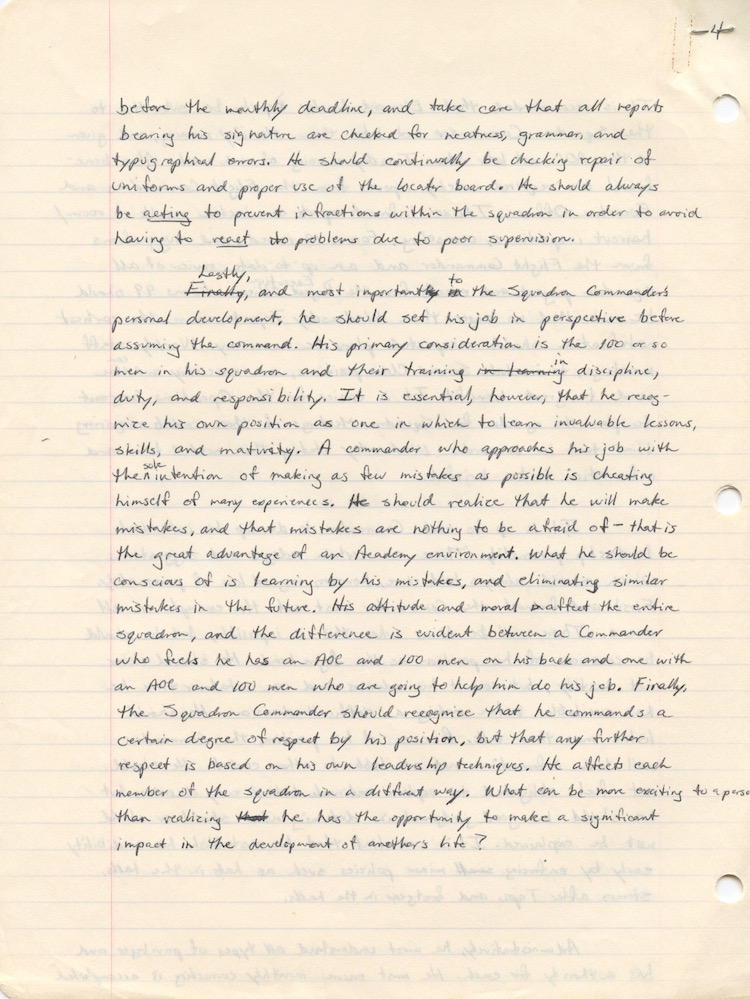
I was somewhat surprised to find this in my “Cadet Wing” attic box. I remember it, but can only guess at the reason I wrote it. I believe that my AOC, Lt. Col. Bob Haines, asked me what I would want to pass along to my successor as CS-39 Squadron Commander, Joe Smith. So I think I wrote it out, typed it, and then probably gave it to Joe – that’s why I just have the handwritten version.
[I’ve since found a comment in my Notebook dated 25 Feb 76 that “job desc due in NLT 1200 Fri, 10 Nov – 29 Feb (Formal).” This seems to confirm what Col. Haines asked me (more like, ordered me) to prepare this as a “job description.” The winter makelist/go-round ended on 29 Feb. Also in the Notebook are my initial notes for this “job description.”]
I don’t presume to speak for any of my 119 classmates who also had the opportunity to experience this short but wonderful leadership laboratory. But in re-reading it, I am proud of my 22 year-old self for some of my observations and self-awareness. And I think some of the details about the more mundane concerns of the cadet experience, c. 1970s, are worth capturing.
SQUADRON COMMANDER
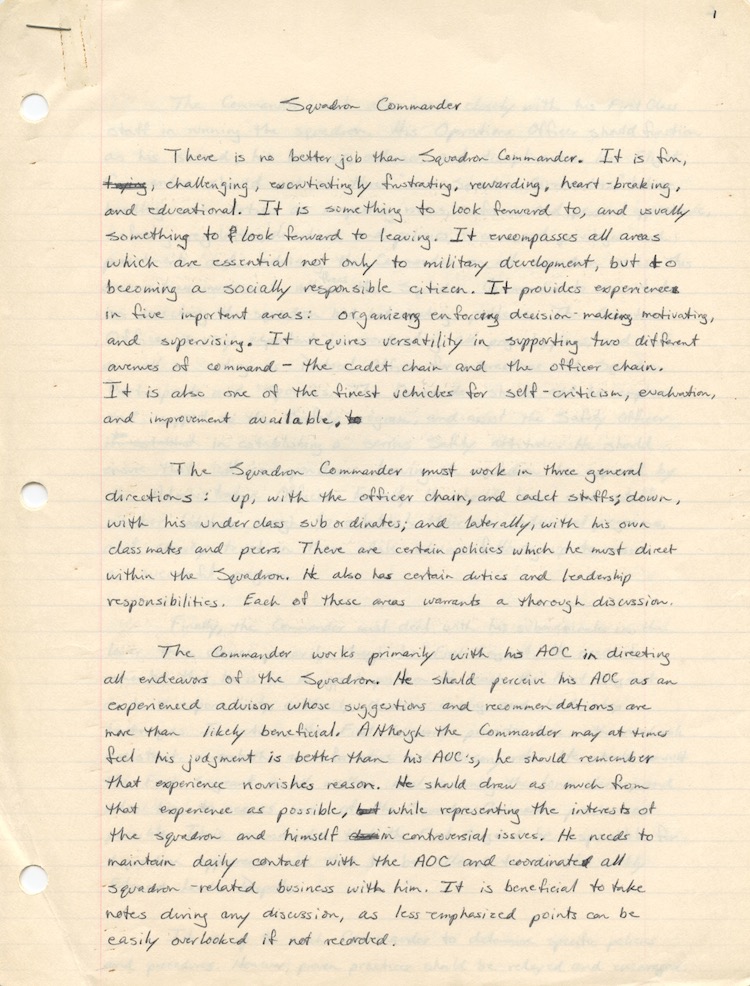
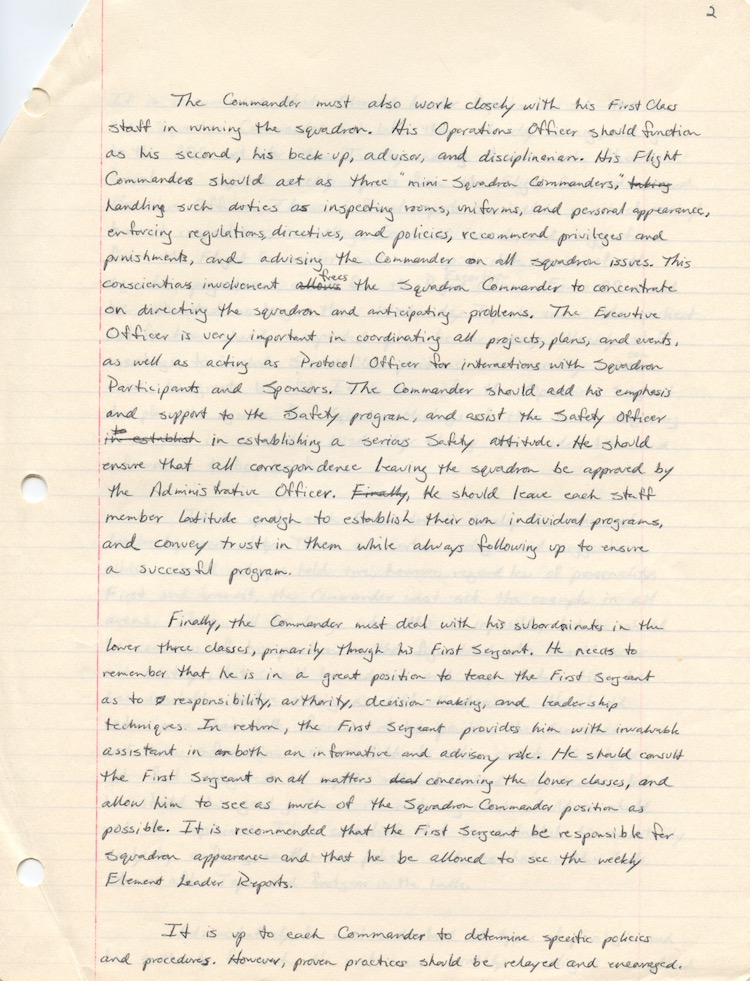
There is no better job than Squadron Commander. It is fun, challenging, excruciatingly frustrating, rewarding, heart-warming, and educational. It is something to look forward to, and usually something to look forward to leaving. It encompasses all areas which are essential not only to military development, but to becoming a socially responsible citizen. It provides experiences in five important areas: organizing, enforcing, decision-making, motivating, and supervising. It requires versatility in supporting two different avenues of command – the cadet chain and the officer chain. It is also one of the finest vehicles for self-criticism, evaluation, and improvement available.
The Squadron Commander must work in three general directions: up, with the officer chain and cadet staffs; down, with his underclass subordinates; and laterally, with his own classmates and peers. There are certain policies which he must direct within the Squadron. He also has certain duties and leadership responsibilities. Each of these areas warrants a thorough discussion.
The Commander works primarily with his AOC in directing all endeavors of the Squadron. He should perceive his AOC as an experienced advisor whose suggestions and recommendations are more than likely beneficial. Although the Commander may at times feel his judgment is better than his AOC’s, he should remember that experience nourishes reason. He should draw as much from that experience as possible, while representing the interests of the squadron and himself in controversial issues. He needs to maintain daily contact with the AOC and coordinate all squadron-related business with him. It is beneficial to take notes during any discussion, as less-emphasized points can be easily overlooked if not recorded.
The Commander must also work closely with his First Class staff in running the squadron. His Operations Officer should function as his second, his back-up advisor, and disciplinarian. His Flight Commanders should act as three “mini-Squadron Commanders,” handling such duties as inspecting rooms, uniforms and personal appearance, enforcing regulations, directives and policies, recommend privileges and punishments, and advising the Commander on all Squadron issues. This conscientious involvement frees the Squadron Commander to concentrate on directing the Squadron and anticipating problems. The Executive Officer is very important in coordinating all projects, plans and events, as well as acting as Protocol Officer for interactions with Squadron Participants and Sponsors. The Commander should add his emphasis and support to the Safety program and assist the Safety Officer in establishing a serious safety attitude. He should ensure that all correspondence leaving the squadron be approved by the Administrative Officer. He should leave each staff member latitude enough to establish their own individual programs and convey trust in them while always following up to ensure a successful program.
Finally, the Commander must deal with his subordinates in the lower three classes, primarily through his First Sergeant. He needs to remember that he is in a great position to teach the First Sergeant as to responsibility, authority, decision-making and leadership techniques. In return, the First Sergeant provides him with invaluable assistance in both an informative and advisory role. He should consult the First Sergeant on all matters concerning the lower classes and allow him to see as much of the Squadron Commander position as possible. It is recommended that the First Sergeant be responsible for squadron appearance and that he be allowed to see the weekly Element Leader Reports.
It is up to each Commander to determine specific policies and procedures. However, proven practices should be relayed and encouraged. It is recommended that Element Leader Reports be submitted to the Squadron Commander not later than Monday morning, and given to the AOC not later than Tuesday morning of each week. Also beneficial are required weekly reports from the Flight Commanders and Executive Officer. These informal reports can include results of room/haircut inspections, counseling, Forms 10 issued, and suggestions from the Flight Commander and an up-to-date review of all squadron projects and events from the Executive Officer. Forms 99 should be submitted no longer than Wednesday Taps to ensure the earliest notification should unexpected plans be necessary. Weekly staff meetings, to include Second Class positions, are necessary and can be used to great benefit. It is easier for the Operations Sergeant to plan the agenda for Squadron Meetings if those cadets requiring time turn in cards Wednesday stating their needed time and information to be briefed.
It is up to each Commander to develop his individual leadership personality. There are certain adages and suggestions which should always hold true, however, regardless of personality. First and foremost, the Commander must set the example in all areas. There will be times when this is impossible, but he should be conscious of his position as the figure head. He should never act hastily, but consult his advisors and use whatever time he has available before making a difficult decision. He should listen more than talk. Because of his position, the Commander will know information not available to other cadets. He should not feel obligated to explain rationale behind every decision, but he should use his good judgment in determining what should or should not be explained. It is essential that he establish his credibility early by enforcing minor policies such as hats in the halls, stereos after Taps, and footgear in the halls.
Administratively, he must understand all types of privileges and his authority for each. He must ensure monthly counseling is accomplished before the monthly deadline, and take care that all reports bearing his signature are checked for neatness, grammar and typographical errors. He should continually be checking repair of uniforms and proper use of the locator board. He should always be acting to prevent infractions within the squadron in order to avoid having to react to problems due to poor supervision.
Lastly, and most importantly to the Squadron Commander’s personal development, he should set his job in perspective before assuming the command. His primary consideration is the 100 or so men in his squadron, their training in discipline, duty, and responsibility. It is essential, however, that he recognize his own position as one in which to learn invaluable lessons, skills, and maturity. A commander who approaches his job with the sole intention of making as few mistakes as possible is cheating himself of many experiences. He should realize that he will make mistakes, and that mistakes are nothing to be afraid of – that is the great advantage of an Academy environment. What he should be conscious of is learning by his mistakes and eliminating similar mistakes in the future. His attitude and morale affect the entire Squadron, and the difference is evident between a Commander who feels he has an AOC and 100 men on his back, and one with an AOC and 100 men who are going to help him do his job. Finally, the Squadron Commander should recognize that he commands a certain degree of respect by his position, but that any further respect is based on his own leadership techniques. He affects each member of the Squadron in a different way. What can be more exciting to a person than realizing he has the responsibility to make a significant impact in the development of another’s life?

It’s a slideshow. Hover over the cover and the Left-Right scroll indicators will appear. Or below the slideshow you can see the individual images that you can click on directly.
[metaslider id=”6380″]
Update: General Yeager died on December 7, 2020, at the age of 97. The following day, Terry Gross of NPR’s “Fresh Air” broadcast a 10-minute excerpt from her 1988 interview with Yeager. Listen here, with transcript.
Ticket and Program with featured speaker Brigadier General Charles E. Yeager (USAF Retired). The text for the ring description, introduction of Gen. Yeager, program of events, and menu is printed below.

[metaslider id=”7595″]
The highest point in the design of the 1976 Class Ring is occupied by Polaris. the guiding stgar over which is superimposed the Roman numeral eighteen. In this way we, the eighteenth graduating class, signify the high goals we have chosen as our own
to guide us through our careers.
On either side of the Polaris is a plane. The contrails. side by side, tell a story of unity, while their climbing attitude of flight represents our climbing to meet the challenges we will face in the years to come.
The Falcon, poised for attack, represents the Class of 1976. Held in its talons, the sword represents knowledge and the lightning bolts signify the awesome potential of aerospace power. The Falcon. when armed with these two powers, represents the vigilance, strength and determination that will insure the promise of freedom for future generations of Americans.
At the base of the design lies the olive branch, the traditional symbol of peace. It represents the Class of 1976’s strong desire that peace should prevail.
Beneath the Falcon’s protective wing are the three figures and flag from Willard’s painting, “Spirit of 76.” They are a reminder to us of a patriotic struggle that was to see a dream become an infant nation.
Born of a revolutionary spark: forged in the heat of our battle for independence; and tampered by years of triumph: our nation shall remain great so long as we remember what it took to make our nation great. The untold courage of those willing to fight oppression, the pride in seeing an impossible dream male real, the untold sacrifices of so many patriots, and their hopes for a better future. were said then. And now, 200 years later, we say in our motto, in three simple, cherished words:
“SPIRIT OF ’76”
General “Chuck” Yeager was born in West Virginia in 1923, graduated from high school in 1941 and enlisted in the Army Air Corps as a private before the war. He was trained as a pilot under the Flying Sergeants Program. He received his wings at Luke Field in the spring of 1943 at age 19 and was sent to England in the fall of 1943 as a flight officer in the 357th Fighter Group, the first Mustang Group in 8th Air Force. He was shot down in occupied France in March 1944 and with the help of the French Underground escaped to Spain. After four months, he made it to Gibraltar and was flown back to England by the British. He returned to his squadron and combat, shooting down 13 enemy aircraft, five ME 109’s on one mission. He shot down an ME 262, one of the first jets shot down in the war.
He returned home in February 1945 and entered flight test at Wright Field, Ohio, July 1945. He was selected for the XS-1 program in 1947 and in that airplane became the first person in the world to fly faster than the speed of sound. He spent nine years at Muroc and Edwards flying all of the research aircraft, XS-1 through X-5. In 1953, he flew the X-lA to a speed of 1650 miles per hour, a mach number of 2.5.
He spent a tour in Germany and at George AFB as a Fighter Squadron Commander. He attended the Air War College in 1960 and then was assigned as Commandant of the Astronaut School at Edwards, where 41 of the astronauts were trained.
He went to Southeast Asia in 1966 as a Wing Commander and flew 127 missions in Vietnam.
He was promoted to Brigadier General in 1969 and served as Vice Commander of 17th Air Force in Germany before being sent to Pakistan in 1971 to serve with the Pakistan Air Force for the war with India.
He returned to the United States in 1973 and was assigned as Director of Safety for the United States Air Force. He retired from the Air Force effective 1 March 1975.
General Yeager has flown 174 types of military aircraft during his career, for a total of just under 11,000 hours, of which 10,300 were in fighters.
MESS CALLED TO ORDER: COLORS ADVANCED
INVOCATION
INTRODUCTION OF HONORED GUESTS
DINNER
SUPERINTENDENTS REMARKS
PRESENTATION OF RING TO CLASS PRESIDENT
PRESENTATION OF CLASS RINGS
ADDRESS BY GUEST SPEAKER
COLORS RETIRED: MESS ADJOURNED
BEAJOLAIS DINNER WINE
SHRIMP COCKTAIL
FILET MIGNON
Bordelais Sauce
BAKED IDAHO POTATO ___ BUTTERED NEW PEAS
Sour Cream & Chive Dressing
FRESH GARDEN SALAD
French Dressing
FRUIT PUNCH ___ HOT COFFEE
HOT DINNER ROLLS
Butter Patties
ICE CREAM TORTE CAKE